What is PPC Advertising
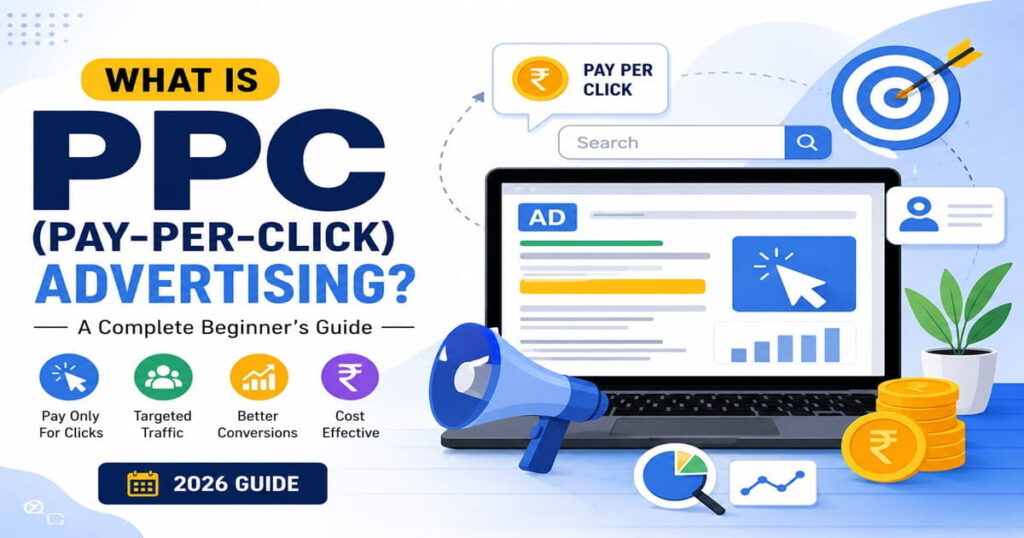
The Pay Per Click advertising refers to the online marketing technique that entails paying each time a click happens on the ad. You no longer need to wait for traffic, because now you can reach your customers through ads that will be shown right away.
The PPC ads are often found on the search engines, social networks, web pages and mobile applications. Because you have to pay only when a click happens, it is believed that this is one of the most effective types of online advertising.
With PPC, any business owner can reach his target audience regardless of whether he has a small business, online store or a blog.
Why PPC Advertising is So Important?
With the help of PPC, businesses can gain targeted traffic within a short time. PPC campaigns allow you to get quick results since they do not require much time like SEO does.
Here are some of its advantages:
- Quick website traffic
- Increased brand visibility
- Targeted reach of audience
- Quick lead generation
- Budget flexibility
- Campaign performance measurability
PPC is often combined with SEO for short term and long term success.
PPC Advertising Process
The process is quite simple.
- Select an advertising platform.
- Pick some keywords.
- Write the ad.
- Set a budget and bid prices.
- Launch the campaign.
- People click the ad.
- Pay only for the clicks that work.
- Monitor and improve the results.
The key to success is in picking the right keywords, creating compelling ads, and bringing the visitor to the relevant page.
PPC Advertising Campaign Types
Search Ads
Search ads show up on the search results page when people enter particular keywords into the search bar.
Display Ads
Display ads include banners or images and promote various goods on web sites or mobile applications.
Shopping Ads
Shopping ads include images of products, their prices and the names of shops. They fit perfectly well for eCommerce companies.
Video Ads
Video ads play before, in the middle of, or after a video on various online platforms and help to promote a company more widely.
Remarketing Ads
Remarketing ads target the visitors who have been to your website already but haven’t purchased anything there.
Bidding Models in PPC
Cost Per Click (CPC)
You are charged when a user clicks your ads.
Cost Per Mille (CPM)
You pay for every 1,000 impressions.
Cost Per Acquisition (CPA)
You pay when the user takes a desired action, such as making a purchase.
Target ROAS
It is an automated bidding model that aims at achieving the desired return on advertising cost.
Advantages of PPC Marketing
Quick Website Traffic
PPC marketing will start providing traffic to your site almost immediately upon approval.
Highly Targeted Audience
You will be able to target your audience based on keywords, geographical location, age, interests, language, and devices.
Quantifiable Results
Clicks, impressions, conversions, and ROI can be tracked.
Manageable Budget
You get to set your budget which you can alter anytime you want.
Quick Leads Generation
PPC marketing will help you quickly generate inquiries and sign-ups.
PPC Supports SEO
Despite the fact that PPC does not increase the ranking of your website, it will give more visibility to your site.
Top PPC Advertising Platforms
There are many platforms providing PPC advertising.
- Google Ads
- Microsoft Advertising
- Meta Ads
- LinkedIn Ads
- Amazon Ads
- TikTok Ads
Pick the platform depending on your objectives and target audience.
Steps for Creating a Successful PPC Campaign
Establish your Goal
Figure out if you need more traffic, leads, or sales.
Perform Keyword Research
Select keywords according to your customers’ search intent.
Write Effective Ads
Include a compelling headline, informative description, and CTA in the ad.
Build a Landing Page
Make sure the ad matches the landing page and encourages conversions.
Budget Setup
It is wise to begin with a small budget and then raise it when analyzing the results of your campaign.
Monitor the Results
Keep track of clicks, CTR, CPC, conversion rate, and ROI in order to optimize your campaign.
Common PPC Advertising Mistakes
- Selecting unrelated keywords
- Neglecting negative keywords
- Creating weak ads
- Redirecting visitors to bad landing pages
- Failing to monitor conversions
- Terminating campaigns prematurely
To prevent such mistakes, you will be able to enhance your campaign and avoid wasting money.
Tips for Successful PPC Campaigns
- Include related keywords.
- Create compelling ad copy.
- Enhance your landing pages.
- Run various ad versions.
- Analyze the data on a regular basis.
- Increase your Quality Score.
- Evaluate your budget often.
- Add new keywords consistently.
The above tips may help you improve the efficiency of your advertising budget.
Conclusion
PPC advertising is one of the quickest methods to attract targeted traffic and build up your business online. This form of marketing enables advertisers to reach out to their customers using paid ads while being in charge of the whole process.
PPC can be very effective in combination with SEO, content marketing, and social media marketing, allowing one to boost the number of visitors, get more leads, and increase sales on the website.
FAQ
What is PPC advertising?
PPC advertising is the type of digital marketing that requires payment only in case somebody clicks on the advertisement.
Is PPC better than SEO?
While PPC gives quick results, SEO gives long-lasting organic traffic. In combination, both give the best results.
Which platform is the best for PPC advertising?
It is Google Ads because of the large audience and high targeting opportunities.
How much does PPC advertising cost?
Depends on your keywords, competition, and budget. However, you can always begin with a small daily budget.
Can beginners use PPC advertising?
Yes, beginners can start with some simple campaigns and then improve them according to the performance report.
Read More……..
What is Digital Marketing? Complete Beginner Guide (2026)
What Is Social Media Marketing? A Complete Beginner’s Guide (2026)
What Is Affiliate Marketing? A Complete Beginner’s Guide (2026)
What Is Email Marketing? A Beginner’s Guide to Growing Your Business